Elevating and Preserving Black, Indigenous, and Immigrant Foodways through Arts and Humanities Funding
Monday May 1, 2023
2:30 – 4:00pm ET
Zoom meeting
Captioning and interpretation available
Register Here
Co-sponsored by Mellon Foundation and
Philanthropy New York
What’s on your plate can speak volumes about where you are, who came before, and the rich histories of oppression, resistance, and collaboration that produced the ingredients and created the recipes in your meal. In addition to sustaining life and impacting environmental conditions, food is also a critically important means of retaining cultural identities and exploring more complete and accurate narratives about the people and places that have shaped this country. While important, approaches to food that emphasize access, nutrition, and agricultural practices without humanistic engagement can obscure how deeply our food systems and choices are shaped by racialized histories, cultural practices, and the ways we make meaning as individuals and communities.
With a social justice focus, and as the nation’s largest funder of the arts and humanities, the Mellon Foundation regularly makes food-related grants that aim to increase scholarship, art, and public programming dedicated to the food histories and cultural practices of Black, Indigenous, and immigrant communities in the US. Mellon’s grants also improve access to culturally appropriate food by protecting and preserving food knowledge and cultural traditions.
Join us for a briefing in which Mellon program officers and two of the Foundation’s grantees will discuss what food grants in the humanities look like and why it is important to integrate this work into food funder strategies. Attendees who wish to continue the conversation after the seminar will have the opportunity to join a community of funders interested in integrating arts and humanities support into their justice-focused food grantmaking.
Learning objectives:
- The importance of Black, Indigenous, and immigrant food knowledge for other food justice outcomes, including food access, nutrition, food sovereignty, and environmental justice
- Descriptions and examples of what arts and humanities food funding can look like at different kinds of institutions and organizations
- How funders can integrate arts and humanities projects and grantees into their food justice grantmaking
- Relevant grantee organizational capacities and needs in this work
Speakers:
- Justin Garrett Moore, Mellon Foundation
- Maria Sachiko Cecire, Mellon Foundation
- Yin Kong, Think!Chinatown
- Zella Palmer, Dillard University Ray Charles Program in African American Material Culture
More about the presenting organizations
The Mellon Foundation believes that the arts and humanities are where we express our complex humanity, and we believe that everyone deserves the beauty, transcendence, and freedom to be found there. Through our grants, we seek to build just communities enriched by meaning and empowered by critical thinking, where ideas and imagination can thrive. Mellon makes grants in four core program areas: Arts and Culture; Higher Learning; Humanities in Place; and Public Knowledge.
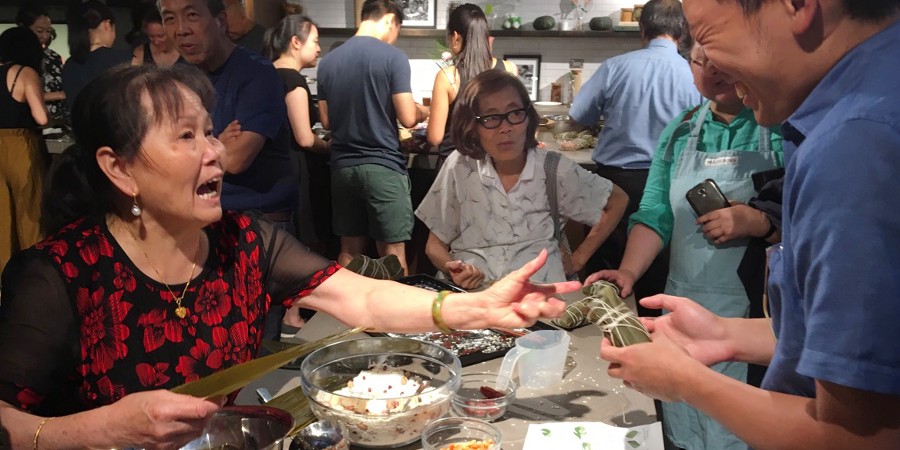
Think!Chinatown, an intergenerational non-profit based in Manhattan’s Chinatown, is here to listen, to respond, and to build Chinatown’s capacities as a strong & vibrant immigrant neighborhood of NYC. Our mission is to foster inter-generational community through neighborhood engagement, storytelling & the arts. We believe the process of listening, reflecting & celebrating develops the community cohesion and trust necessary to take on larger neighborhood issues. Our aim is to overcome barriers of community organizing where socio-economic factors, language, and cultural barriers create challenges for immigrant communities’ autonomy to make decisions in their own neighborhood. We’ve built Think!Chinatown to push from within our neighborhood to shape better policies and programs that define our public spaces, to celebrate our cultural heritage, and to innovate how our collective memories are represented.
The Dillard University Ray Charles Program in African American Material Culture is to research, document, disseminate, preserve, and celebrate African American culture and foodways in the South. New Orleans sits at the historical and cultural intersection of diverse groups with distinct and recognizable pasts. This program aims to understand how African, Indigenous, Caribbean/Latin American, European, and American cultures coalesced to create a culture that is uniquely African American.