Skip to: The Fellows | The Program | Coaching | Collaborative Projects | Evaluation
The Fellows
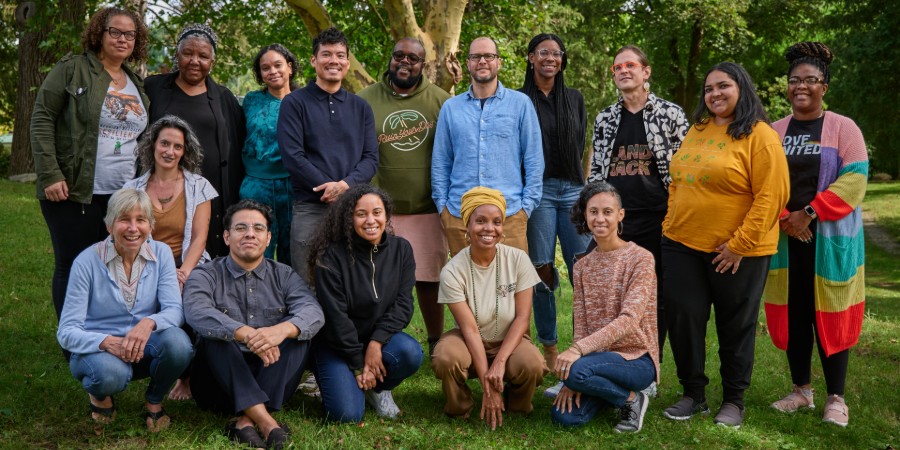
After a rigorous process, a volunteer selection committee chose twelve outstanding food justice leaders for the cohort. Collectively the group represented nonprofits, philanthropy, the private sector and government officials. Their work spanned urban agriculture, rural farming, food procurement, labor activism, indigenous practices, farmland preservation, and so much more.
The Program
These fellows began their journey through a redesigned curriculum in September 2023, which included a series of virtual sessions and in-person retreats designed and facilitated by the experts at Emerging Equity.
Kickoff
Many of the fellows met for the first time at the CFF Annual Gathering. The fellowship officially kicked off the next day at the opening retreat hosted at Stony Point Center. Over the next three days fellows participated in community-building activities and began an exploration of identity and power that continued throughout the curriculum.
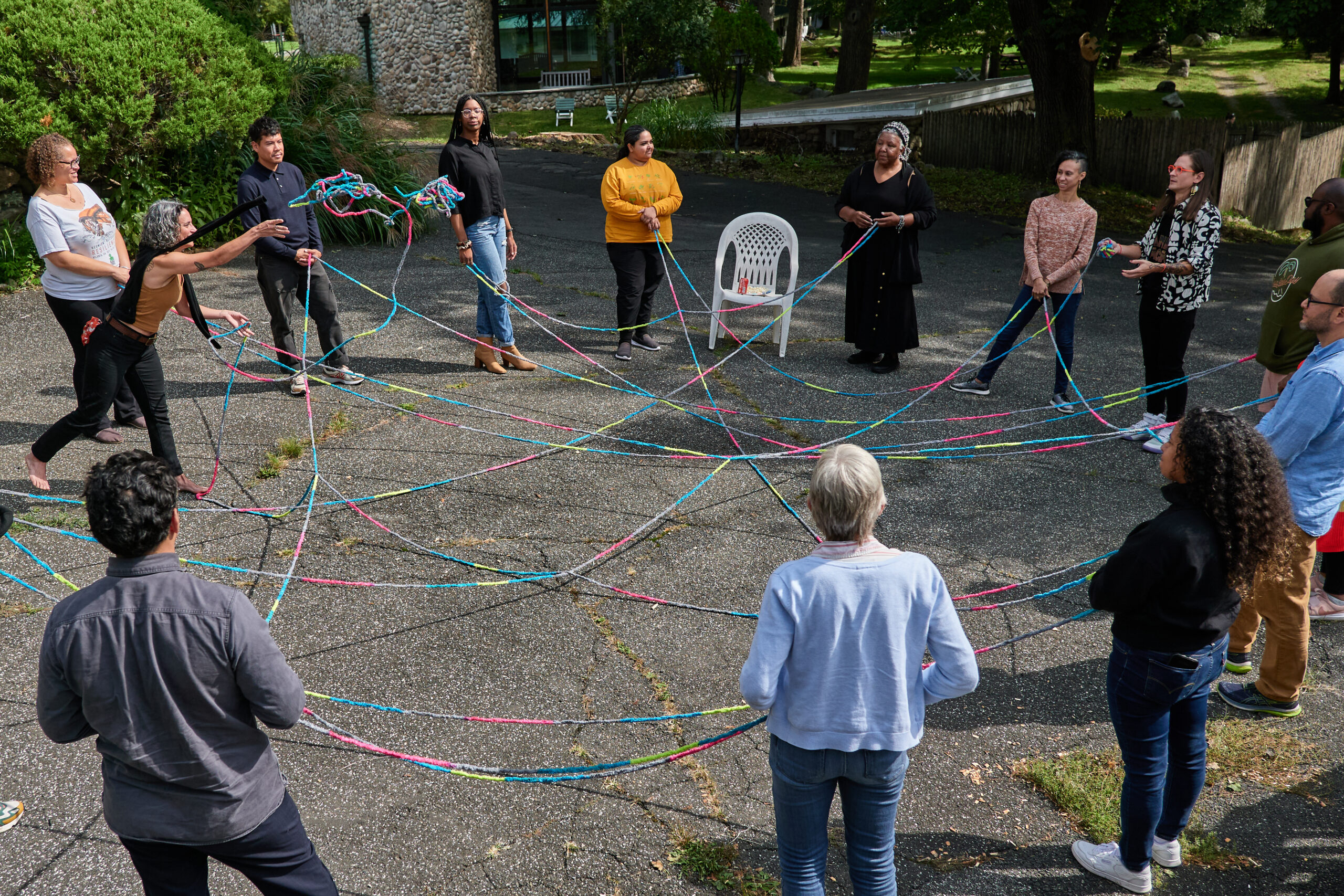
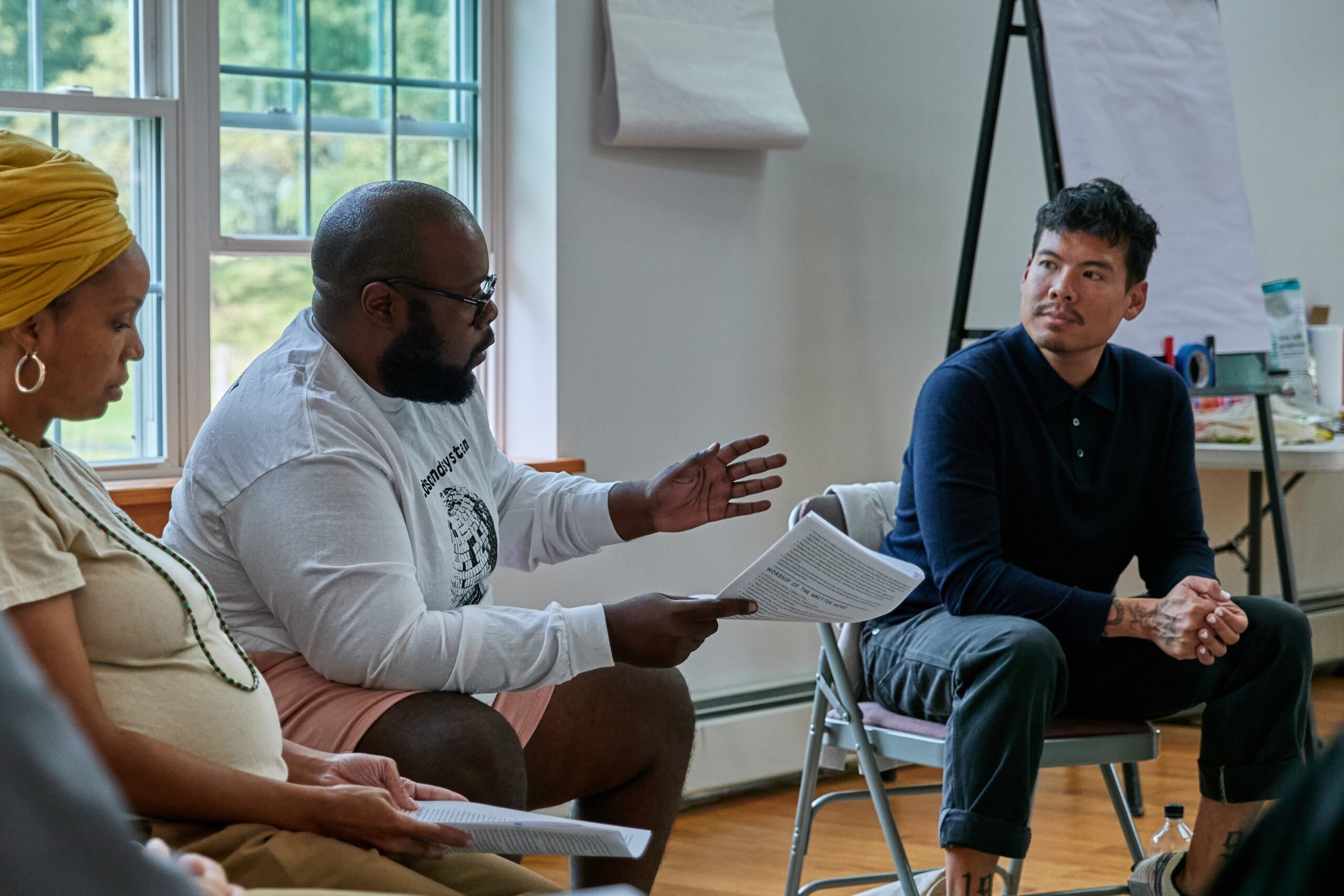
Fellows at the first retreat (Photos by Walter Hergt)
“It was so great to focus on myself and what things I need to do for my own self-preservation and also my growth.”
“I was blown away by the authenticity and amazingness of my fellow fellows.”
Collaboration Groups
For the next few months the fellows met virtually as they progressed through the curriculum and presented to each other about their work. Through these meetings, fellows learned more about each other and made connections across different areas of the food justice ecosystem.
Midway through the program, our facilitators guided the fellows through an exercise to brainstorm and select themes for group projects. Fellows were then divided into three groups, each working on a specific project within their theme, while leaning on the skills and learnings from the first part of the fellowship. This work was the focus of the next few virtual sessions and a four-day retreat at The Watershed Center in March.
Themes:
- Systems Change: Addressing a systems gap, a need within the system, or an underexplored strategy.
- Healing & Story: Addressing burnout, the need for advocate healing, honoring elders, storytelling, and/or a bridge-building objective.
- Capacity Building: Increasing connectivity, networking, mapping assets, or growing the interdependence of movement stakeholders.
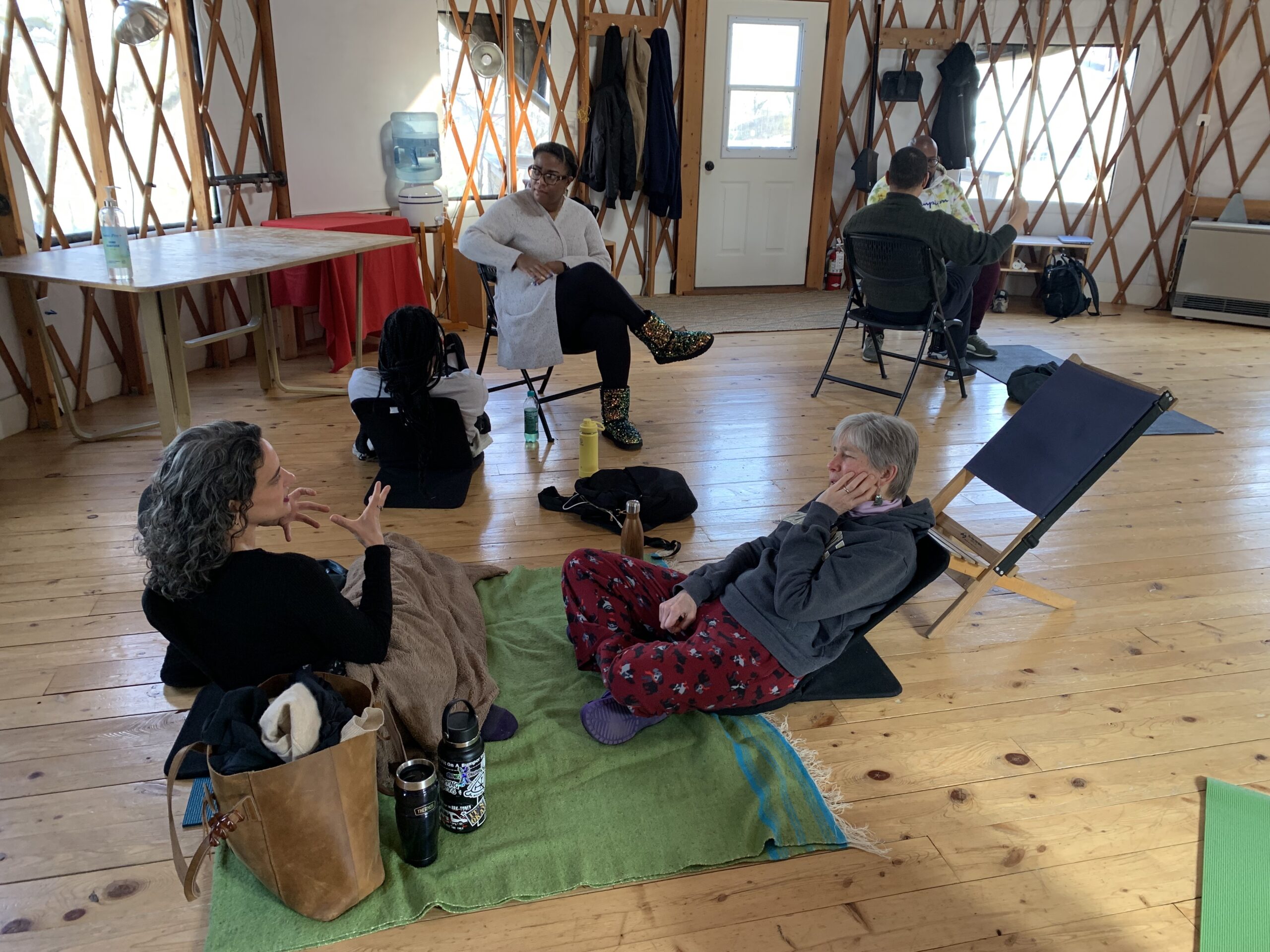
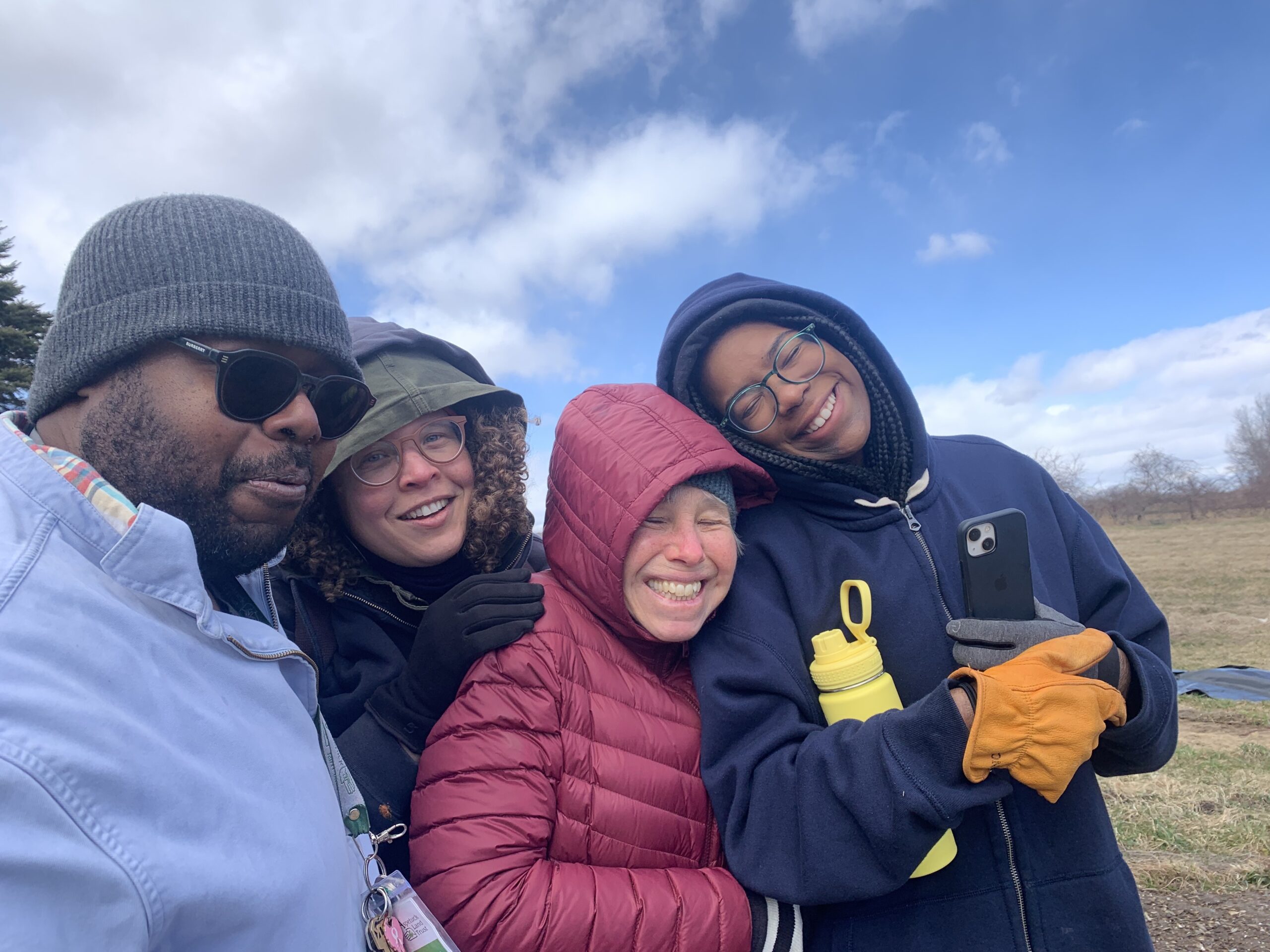
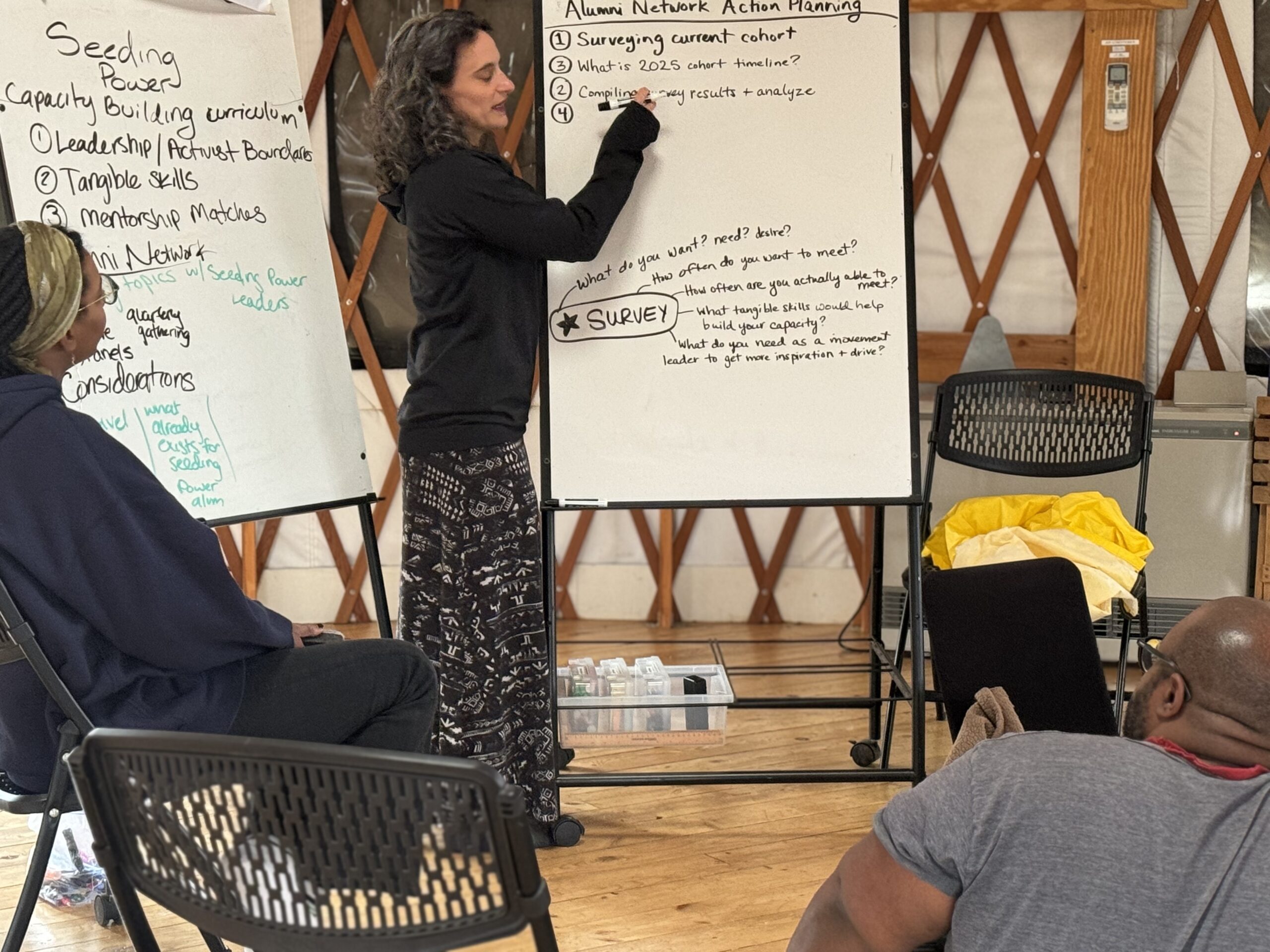
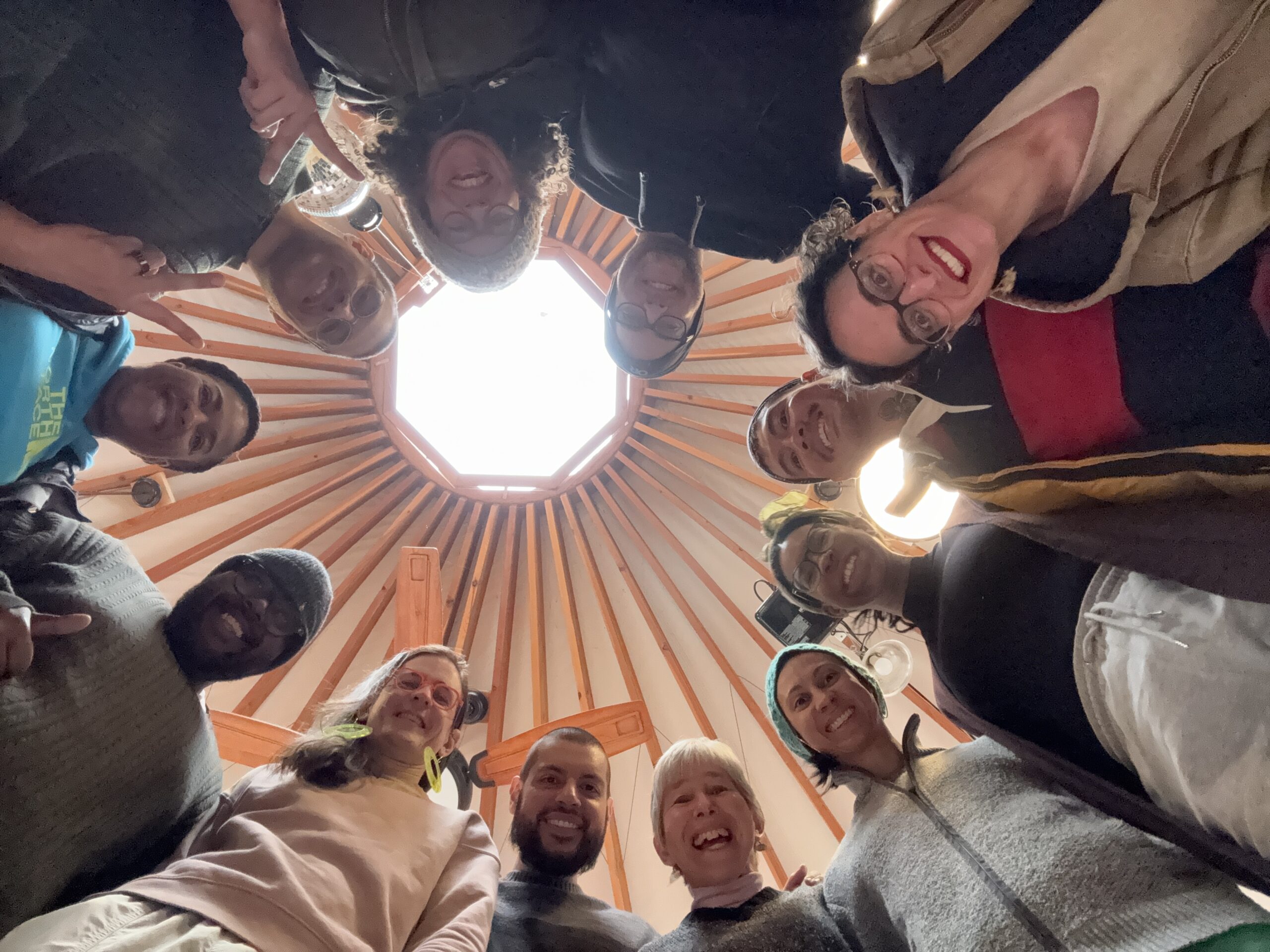
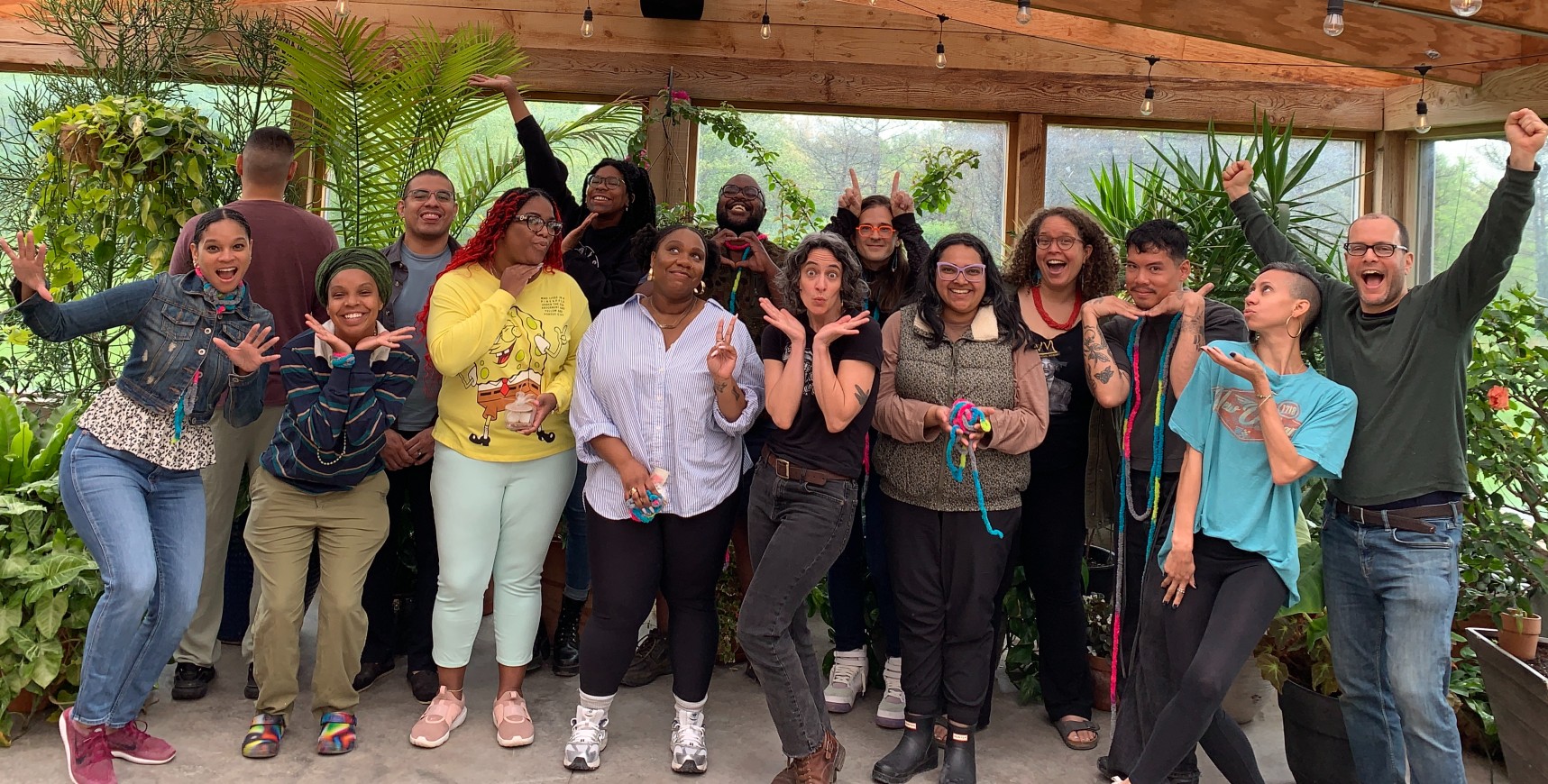
Fellows at the second retreat
“I loved how spacious everything felt. There were good moments to reflect, pause, and be intentional.”
“Honestly, I found everything wonderfully useful including morning meditations, morning sessions about collaboration learnings, sharing land-based practices and the closing debriefs.”
Conclusion
By the end of the second retreat, all of the groups had their projects mapped out. In the final months of the fellowship, they focused on refining their ideas and completing the projects. To be clear, the goal of these collaboration projects is not necessarily to have an entire project realized and implemented in just a few months. Rather, it is a chance to incorporate each of the team members’ interests and utilize some of the skills and lessons developed during the fellowship. The project may end up being fully executed and completed during the fellowship, or it may be a design for future work to be initiated later, or just a concept never intended to be implemented.
The final retreat was held in May at The Arnold House. Each collaboration team presented their final project, and together we formally closed out the fellowship experience. The group reconvened once more in June for a virtual session to collectively debrief the entire Seeding Power program.
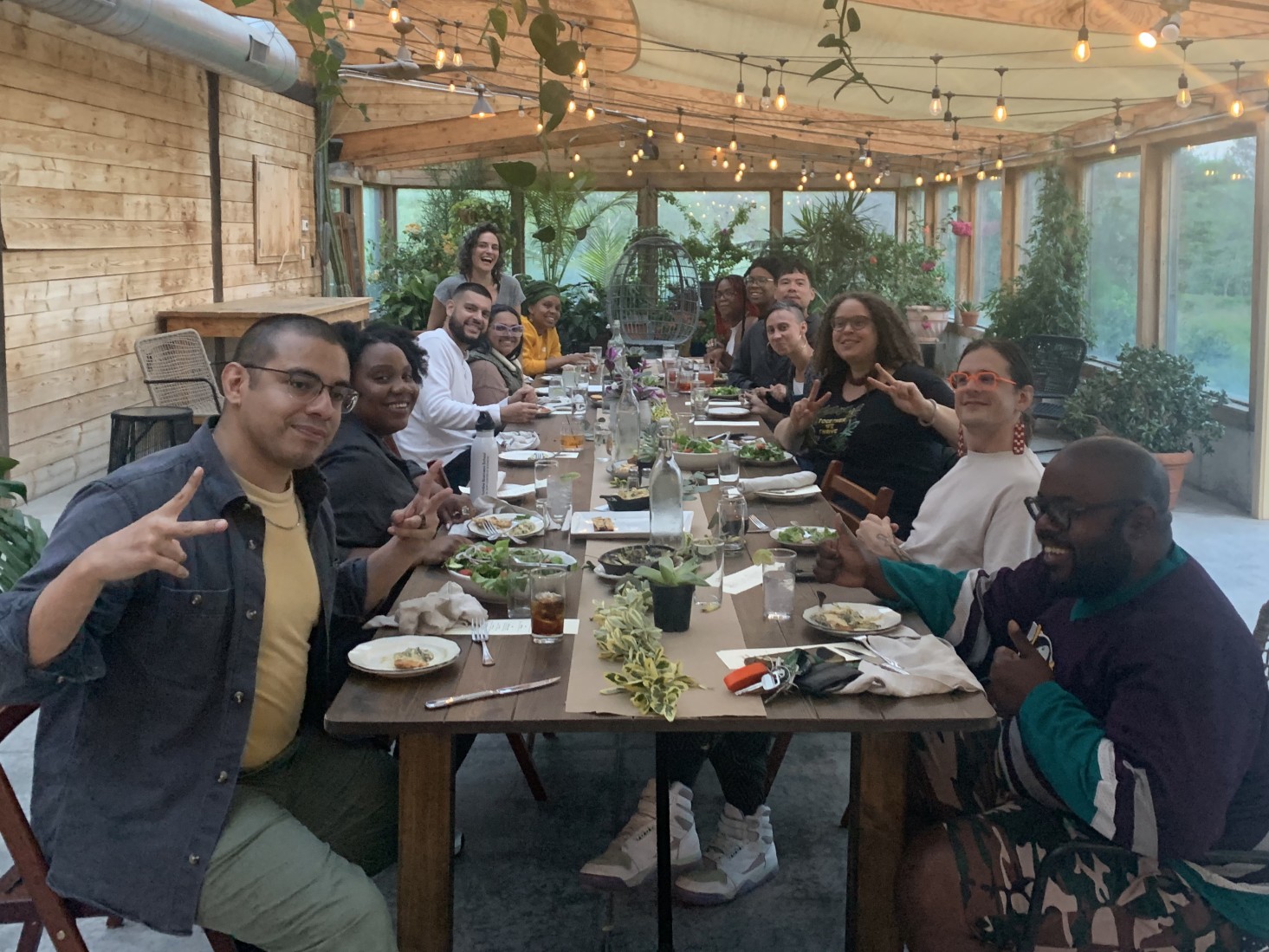
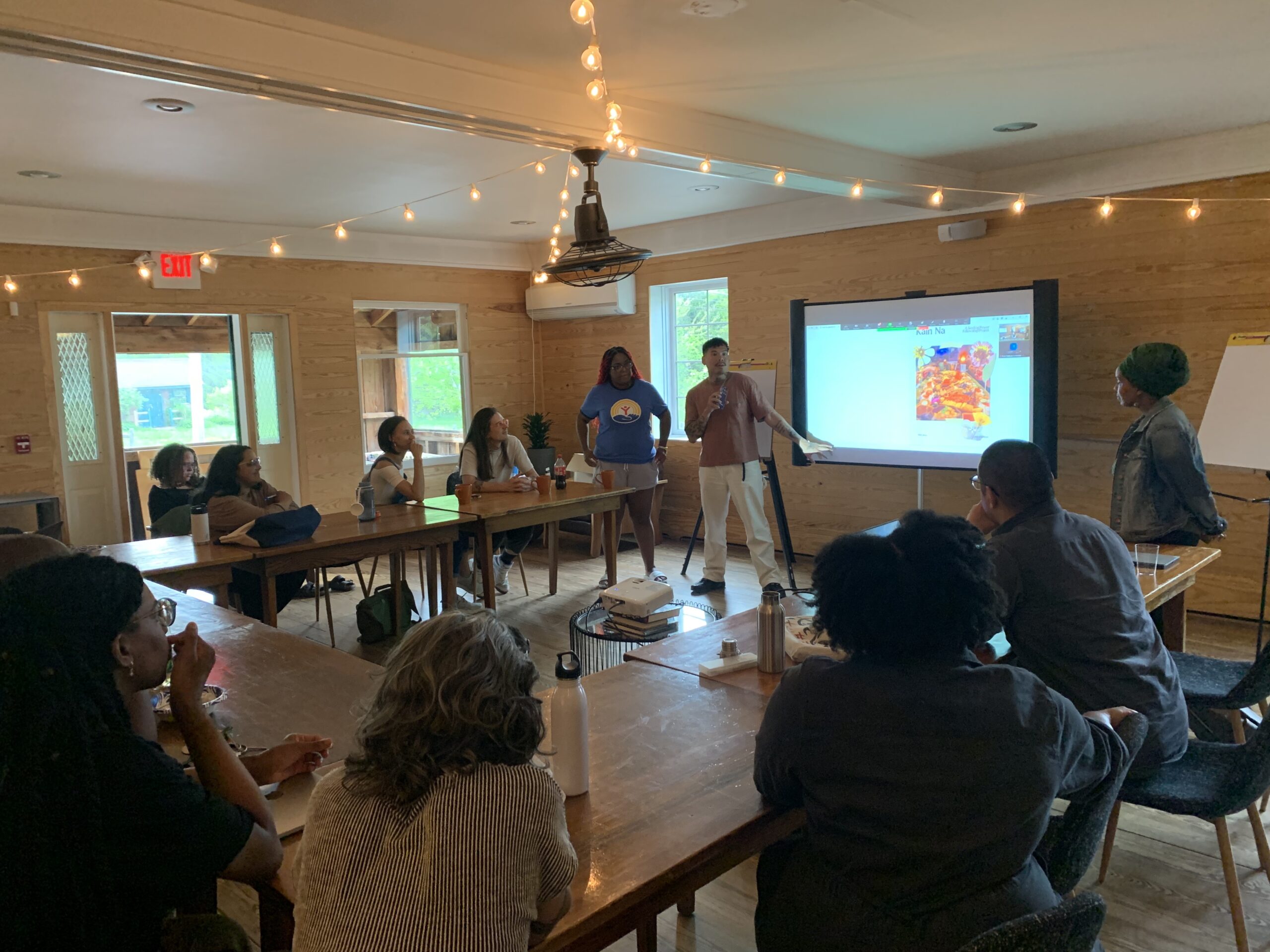
Fellows at the third retreat
“Our last night together felt like something out of a movie. Laughter, stories, work and joy around a long dinner table in a barn. It is something I won’t forget, it was the most relaxed and carefree I have been able to be in months.”
“The collaborative sessions were a phenomenal opportunity to put in practice some of the principles we learned in the first part of this program.”
Coaching
A new element of the program design this year was to include a minimum of three individual coaching hours for each fellow to use as they saw fit. Each fellow was assigned a team member from Emerging Equity to be their coach, and the fellow determined the scheduling and content of their coaching sessions.
In surveys, fellows offered that:
- Coaching helped them to navigate issues and problems they were facing within their roles and organizations
- They learned more about their skills and values as a movement leader
- They appreciated getting tailored and individualized support from the Emerging Equity team.
“For me, the work was always the easy part. It was the messaging and feeding info to people that was the hard part. From the coaching sessions to just hearing the EE Team talk, it helped me become a better communicator and helped me define what and who I talk for.”
“[Coaching] helped me get in touch with my own power [and] reflect on how I show up in the world. Extremely insightful.”
Collaborative Projects
The impacts of a program like Seeding Power likely take years to manifest. Members of our first cohort formed strong relationships that led to numerous collaborations between their organizations after the program finished, and even the creation of entirely new projects that pursued and received grants collectively.
It is too early to assess the long-term impacts of our most recent cohort, but we can share what came of the collaboration groups:
Systems Change
This group crafted a design for a virtual event that did not (yet) happen. It was proposed as an intentional gathering of individuals from the different sectors represented by the cohort, namely nonprofit leadership, community organizers, funders, and government. The would lead participants through an experience that could address power dynamics and potential conflicts, and then make room for the positive impacts that could follow.
Capacity Building
This group agreed that the capacity building they really wanted was more time together in community with other Seeding Power fellows. So, they created the template for an alumni network that could be launched upon their completion of the fellowship, and incorporates previous and future alumni as well. Excitingly, in the time since this cohort has concluded, the network has been put into action and is up and running!
Healing & Story
This group produced a zine in the form of a cookbook, with recipes for healing and restoration. They were inspired by the power of pausing, which was afforded them at the retreats. They collected stories, recipes, or other contributions from the cohort that spoke to the restorative power of rest, and the myriad ways to achieve it. The name of the zine is Kain Na, which in Tagalog means, “let’s eat”, and is used as a greeting when seeing or welcoming guests.
“I’m so happy with the new community of practice I am leaving this experience with. I’m excited to think about how that community will grow with successive cohorts. What a special treat and privilege to have participated in this fellowship!”
The Kain Na zine created by one of the collaborative projects.
(Display works best when viewed in full screen)
Evaluation
CFF conducts an evaluation as part of every Seeding Power cohort. We want to continuously learn about what works and what doesn’t, and how best to improve the experience. Surveys are collected before the fellowship begins to create a baseline for assessment, and then again at the midpoint and after the conclusion of the program. Surveys are also collected after each in-person retreat.
This data, and the final debrief in June, was used by Emerging Equity to evaluate the 2023-2024 program. The evaluation design and report was led by a member of their team with a PhD and deep experience in qualitative methods.
Here is an excerpt from the evaluation:
The data demonstrates a high level of positive impact and high net positive ratings for quality and meaningfulness of the fellowship experience. Fellows very highly rated the overall experience of the fellowship and the quality of its design. In short, comments regarding the effectiveness of the design suggest that it creates space for an honest approach to movement building. All of the fellows find the fellowship itself and the skills, lessons, and learnings to be useful and relevant to themselves and to their lives and work, with the majority indicating that “the experience has completely changed my life/work.” Fellows were asked to reflect on their confidence that they themselves, their peers, and the Food Justice and Land Movement would benefit from this Fellowship. Ninety-two percent were confident, with over two thirds of those indicating they were very confident. Fellows also report similar conviction in having grown both as individuals and as movement leaders as a result of participating.
“This was a beautiful experience. I felt so seen in who I am as a person and also as a food justice worker… It was a space to rest, restore and refill my cup which I don’t get in the work I do.”
“This was a great way to meet and connect with folks across the food sector. A major issue is our silos and divisions, this allowed us to connect as people and approach the work differently.”
“I was so burnt out with food systems work when I entered this fellowship but now I feel a sense of hopefulness that hasn’t been there in a long time.”